
The Institute of Transportation Engineers (ITE) organizes regional meetings that bring together the people who actually design, operate, and manage our road networks. In 2025, I attended three ITE district meetings back-to-back-to-back — Memphis, Annapolis, and Buffalo — each covering a different slice of the country with distinctly different safety challenges.
Here’s what I took away from each.
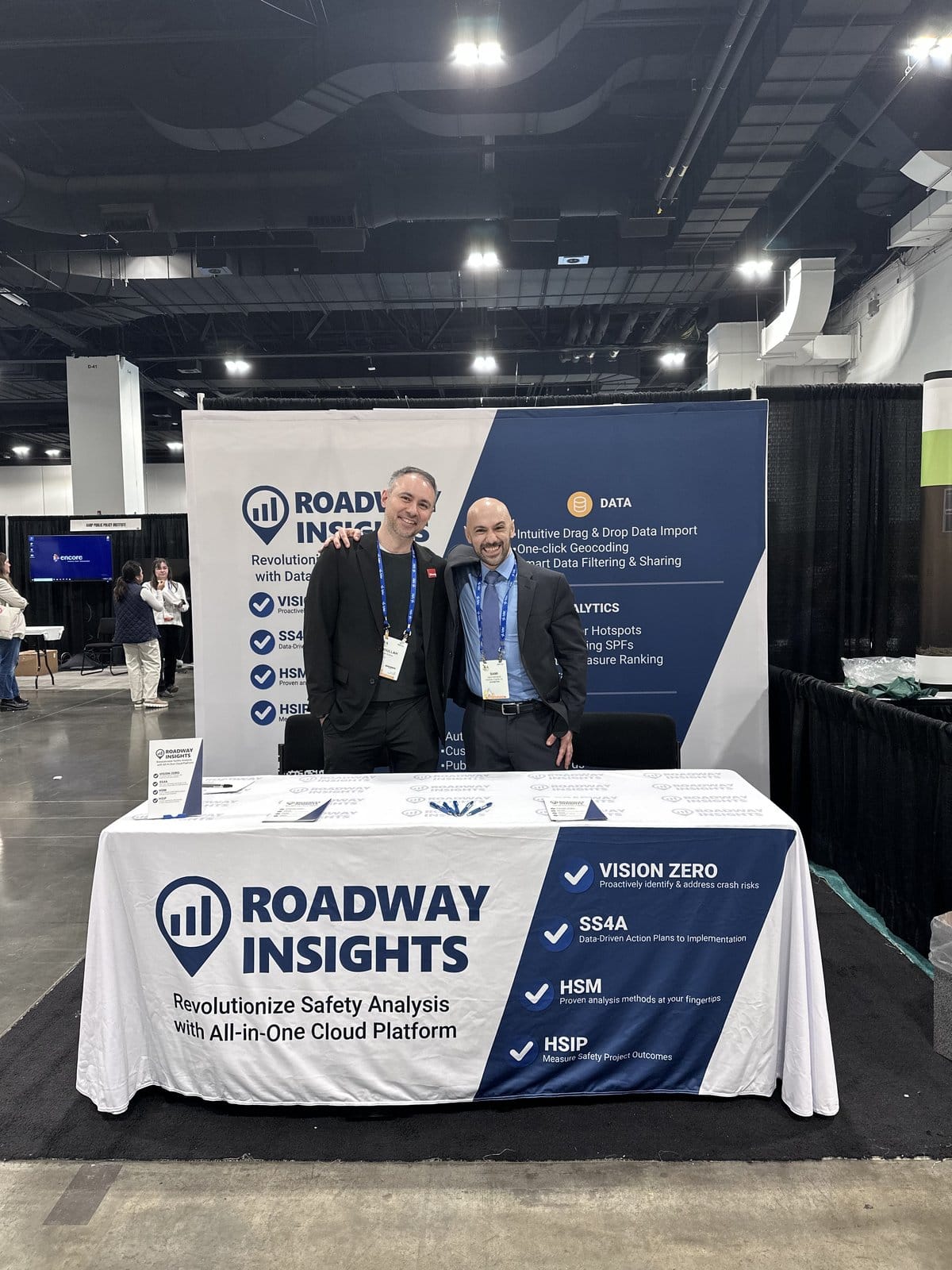
Connecting with transportation safety professionals at a regional ITE conference.
Three Regions, Three Perspectives
Southern / Missouri Valley District
The Southern and Missouri Valley districts cover a vast geography — from Missouri to Mississippi, Texas to Tennessee. The dominant theme here was rural safety. Many attendees represented agencies managing thousands of miles of two-lane rural roads where the crash-per-mile rate is low, but severity is disproportionately high.
Several presentations focused on low-cost systemic safety improvements — rumble strips, curve delineation, shoulder widening — that can be deployed at scale without breaking the budget. The challenge: identifying which of those thousands of miles need attention first. That’s exactly where network screening becomes essential.
Mid-Colonial District
The Mid-Colonial meeting draws from Maryland, Virginia, DC, Delaware, and surrounding areas — some of the most data-rich states in the country. I presented on how data analytics powers the Safe System Approach, walking through how agencies can move from reactive crash investigation to proactive systemic analysis.
The audience questions were sharp: How do you handle mixed-quality data? Can you run corridor-level screening alongside intersection analysis? How does this connect to SS4A grant narratives? These are practitioners who already have the data — they need better tools to turn it into action.
Northeastern District
The Northeast is dense, complex, and multi-modal. Buffalo brought together professionals dealing with urban congestion, pedestrian safety, aging infrastructure, and harsh winter conditions — often all at the same time. The conversation here was heavily focused on High Injury Networks and how to make them living, actionable tools rather than static maps in a planning document.
One audience member put it perfectly: “We built our HIN two years ago. Nobody looks at it.” The challenge isn’t creating the network — it’s integrating it into project selection, maintenance prioritization, and grant applications so it stays relevant.
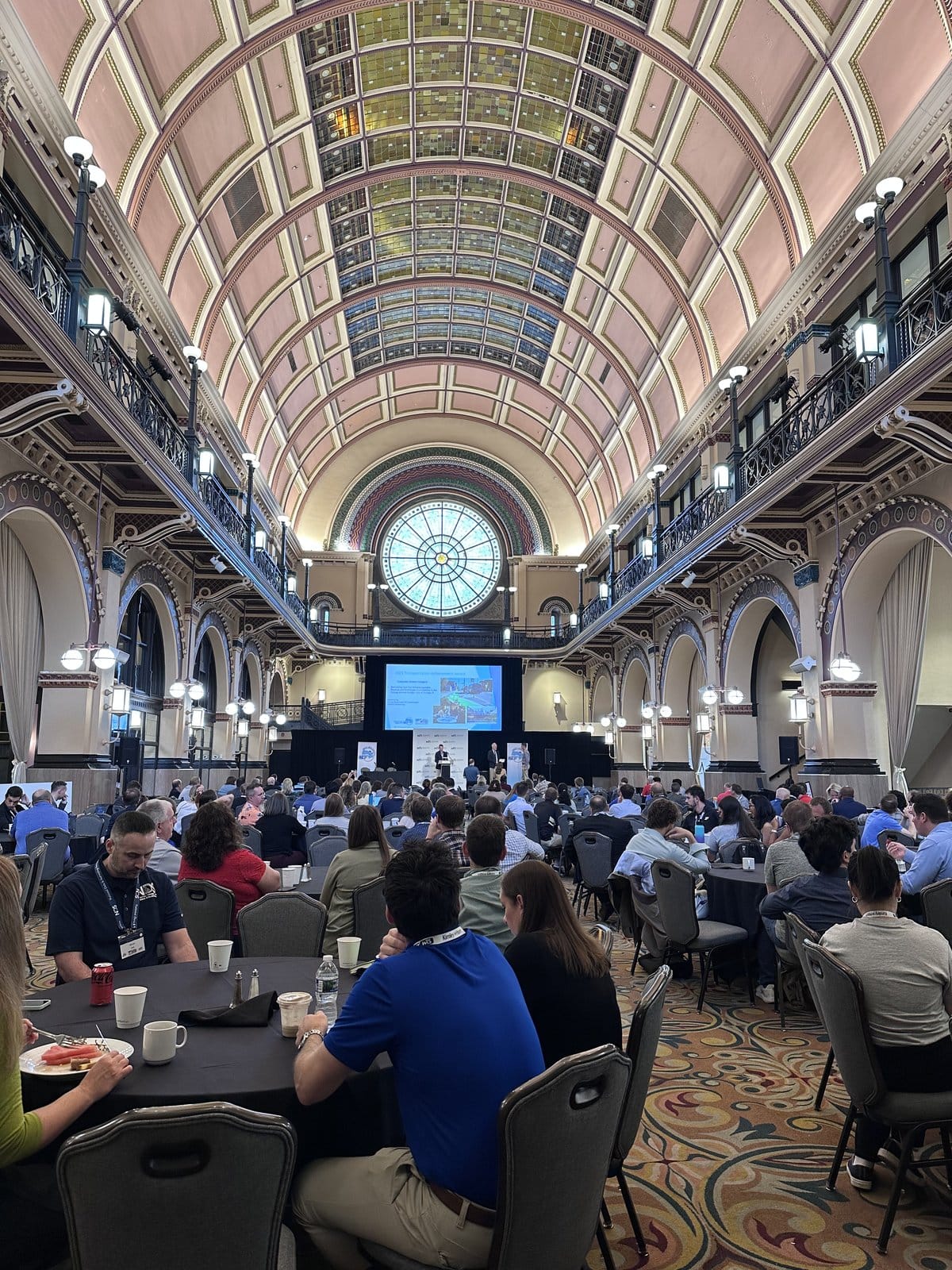
The energy at ITE sessions is always high — these are people who want to solve problems.
Common Threads
Despite the regional differences, the same themes kept surfacing at every ITE meeting:
Tool Accessibility
Agencies want to run their own analysis without relying on consultants for every question. Self-service analytics is no longer a nice-to-have — it’s expected.
SS4A Pressure
The Safe Streets for All program has created a tidal wave of demand for comprehensive safety analysis. Agencies need to produce data-driven safety plans on tight timelines.
Systemic Over Spot
The industry is shifting from spot-location fixes to systemic approaches. Agencies want to identify patterns across their entire network, not just react to the latest fatal crash.
Integration Matters
Analysis that lives in a standalone report has limited impact. The tools need to connect to project development, budgeting, and grant writing workflows.
What This Means for Our Product
Every ITE meeting reinforced that we’re building the right thing. The features safety professionals are asking for — network screening, HIN visualization, integrated countermeasure selection, SS4A-ready reporting — are exactly what Roadway Insights delivers.
But these conversations also pushed us to do more. We’re now prioritizing:
- Rural network screening that works with segment-based data and low-volume roads
- Dynamic HINs that update automatically as new crash data arrives
- Export-ready narratives that feed directly into grant applications
- Multi-year trend analysis for before/after countermeasure evaluation
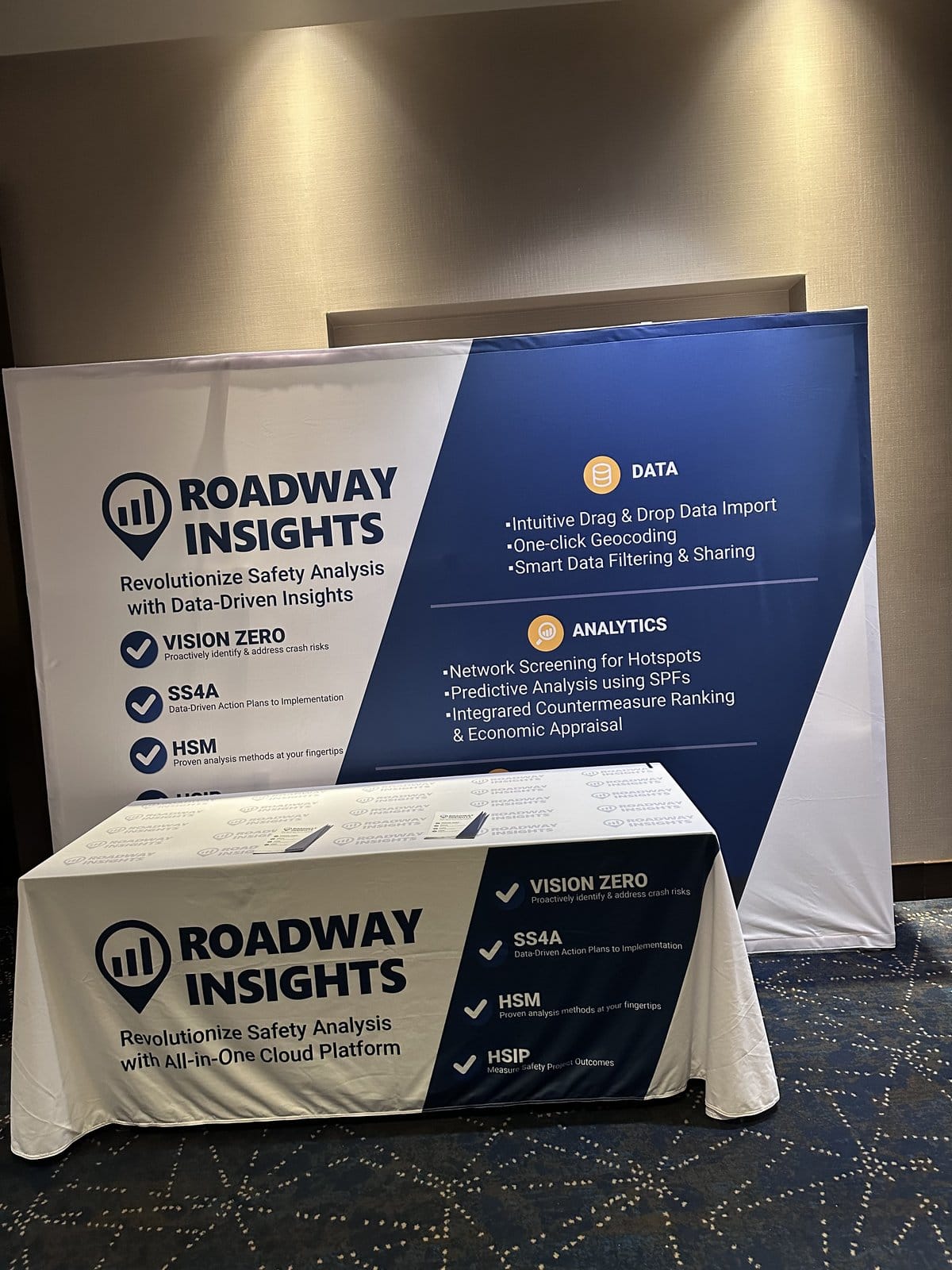
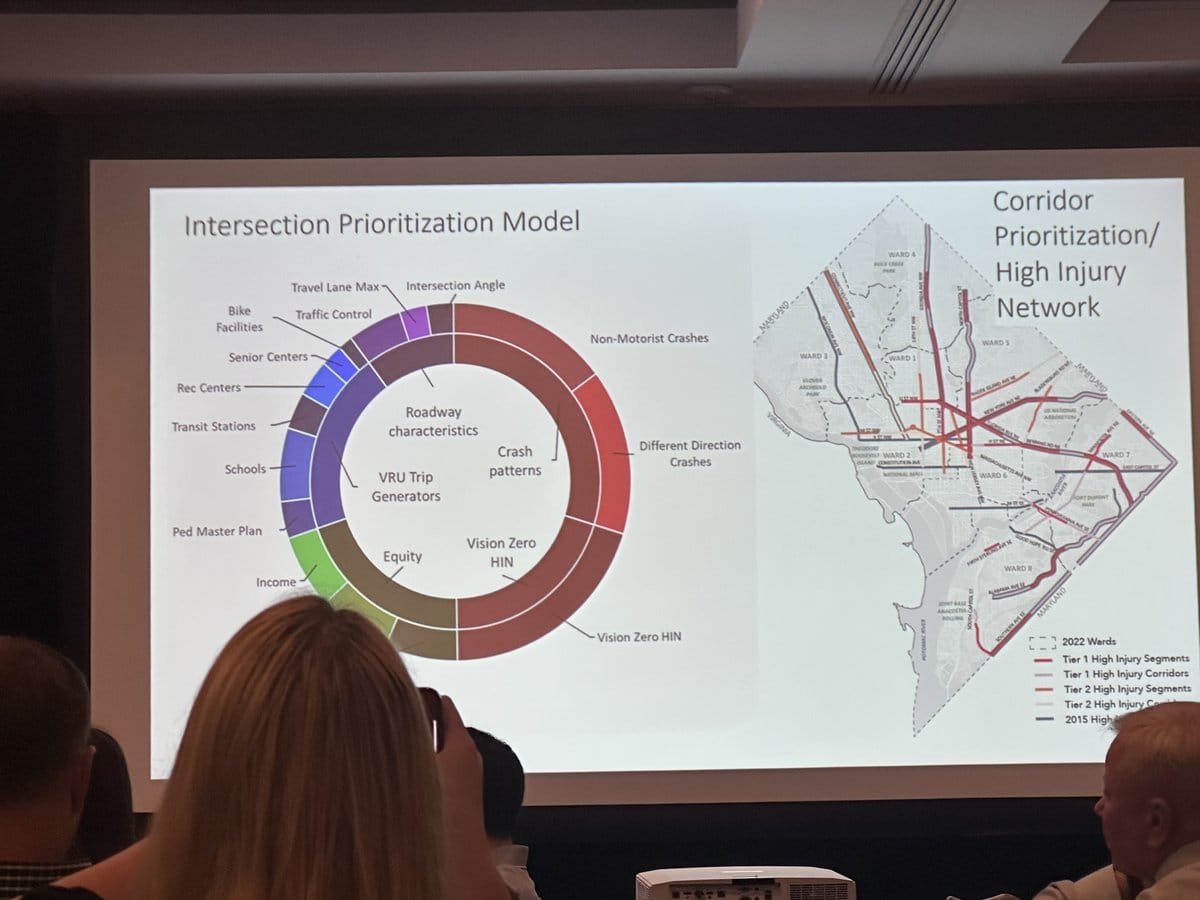
Left: Our booth at Northeastern ITE in Buffalo. Right: HIN corridor prioritization — a hot topic at every meeting.